
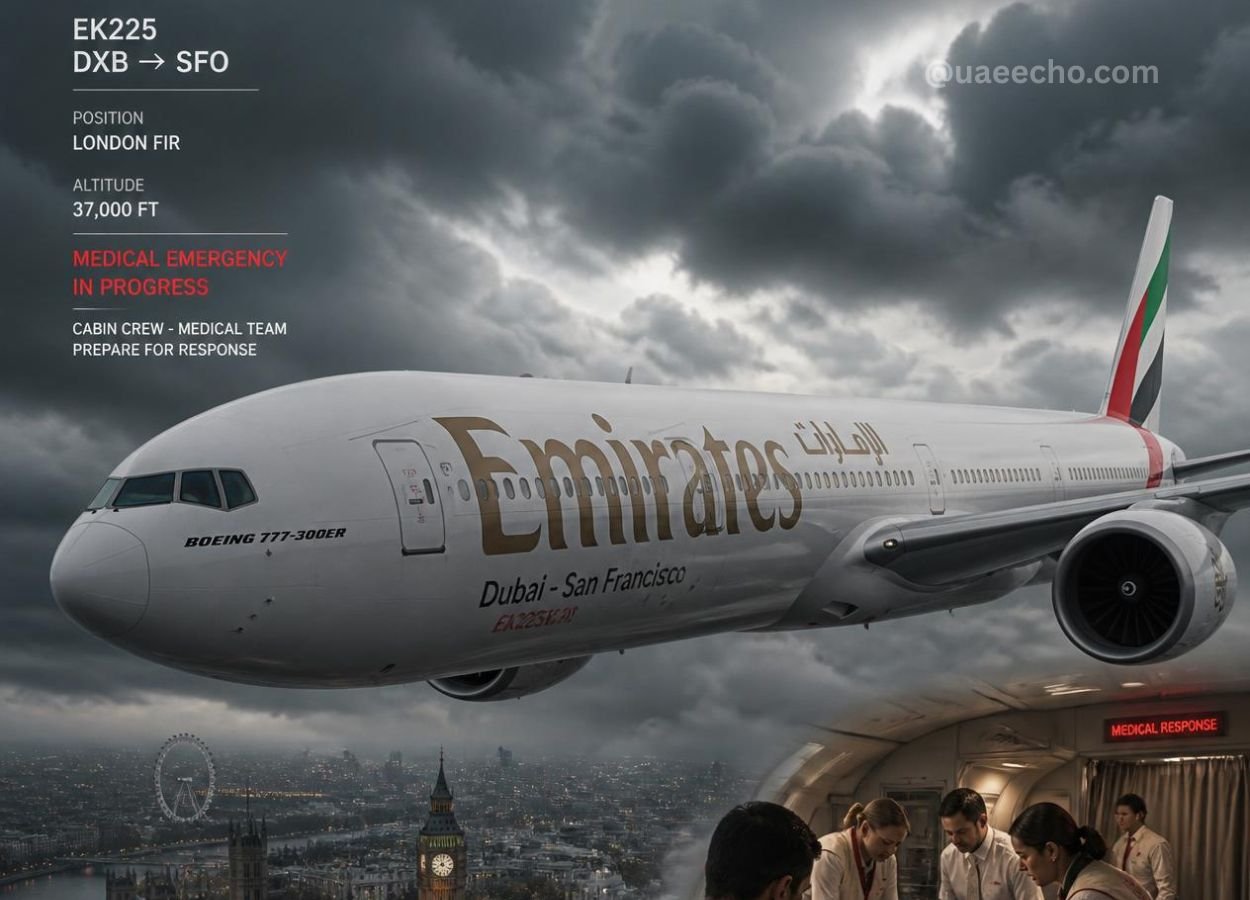

On an Emirates flight from Dubai to San Francisco, a passenger experienced a medical emergency, forcing the crew members to locate the closest appropriate airport for immediate help. As a result, the flight had to divert to London.
During the transatlantic trip, which was traveling between Dubai International Airport and San Francisco International Airport, the aircraft reversed course and made a safe landing at London Heathrow Airport. When the aircraft arrived, medical staff arrived to treat the afflicted passenger right away before the aircraft was ready to resume its journey.
Emirates has not disclosed the passenger’s identity or the nature of the medical condition, citing privacy considerations. The airline also did not confirm how long the aircraft remained on the ground in London before resuming operations.
Commercial airlines routinely divert flights when passengers or crew members experience serious medical issues that require urgent attention. Flight crews work closely with ground-based medical support teams and air traffic controllers to determine the most appropriate diversion airport, taking into account factors such as flight location, available medical facilities and operational requirements.
Although diversions can affect flight schedules and onward connections, aviation experts note that passenger safety remains the overriding priority in such situations. Airlines are trained to respond quickly to onboard medical incidents, with cabin crews providing first aid while pilots coordinate with medical advisory services and airport authorities.
The diversion resulted in delays for passengers travelling to San Francisco, but the aircraft landed safely in London without any reported operational issues. Once the medical situation had been addressed and the necessary ground procedures were completed, the flight was expected to continue to its final destination.
Emirates operates multiple daily long-haul services from Dubai, and the airline has established procedures for handling in-flight emergencies across its international network. Such incidents, while relatively uncommon, are managed under internationally recognised aviation safety protocols designed to ensure passengers receive timely medical care when required.