

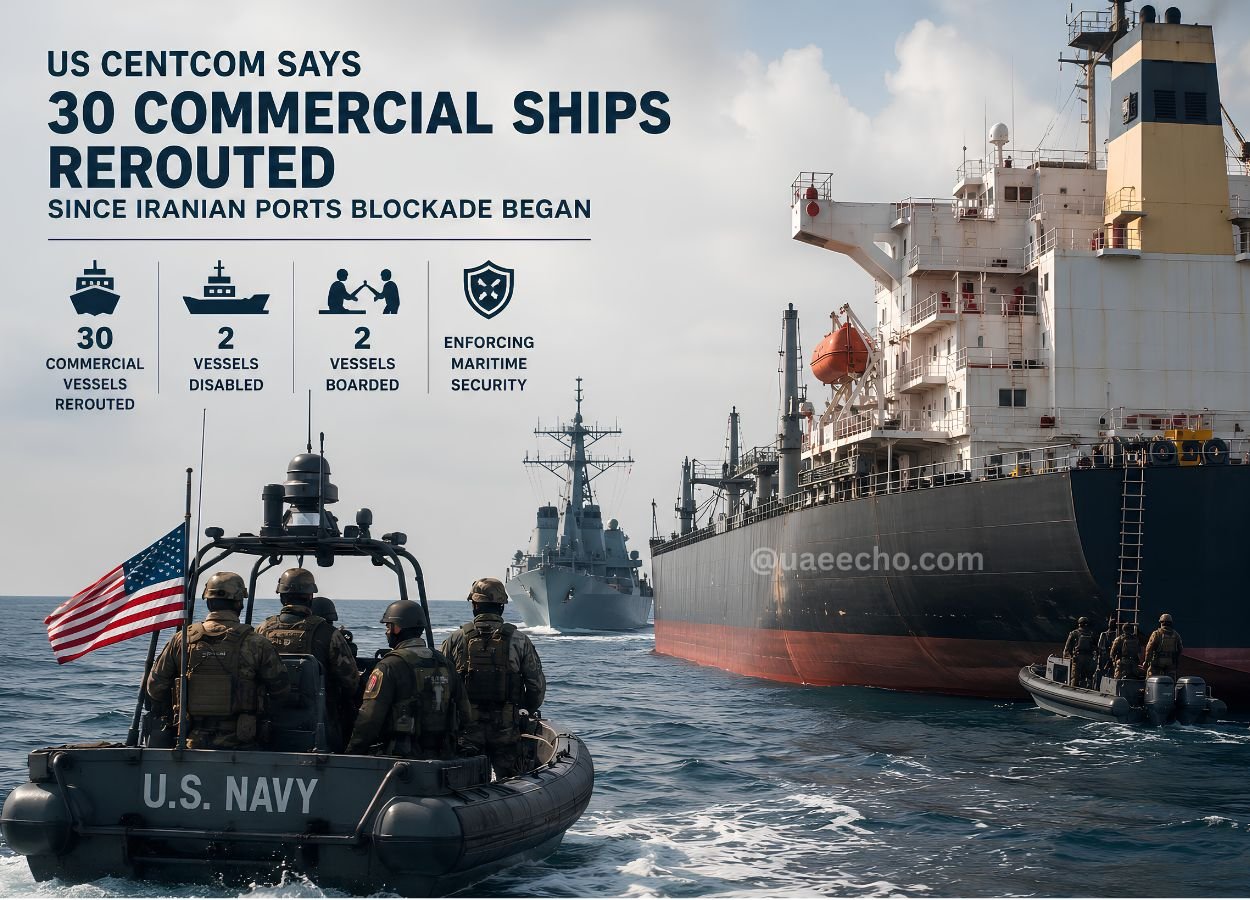


The U.S. Central Command (CENTCOM) reported that it has rerouted 30 commercial vessels since the commencement of the naval blockade on Iranian ports, underscoring the extent of maritime enforcement operations in the Gulf amidst rising regional tensions.
In an update released on Friday, CENTCOM reported that, as of July 31, U.S. forces had diverted 30 commercial vessels, disabled two, and boarded two others to ensure compliance with the blockade on maritime traffic to and from Iranian ports. The military stated that these operations are being conducted to enforce restrictions while upholding regional security.
The latest figures indicate an increase in enforcement activity since the blockade resumed in mid-July. US naval assets, supported by surveillance aircraft and other military resources, have been monitoring commercial shipping routes and intercepting vessels suspected of attempting to breach the restrictions. According to CENTCOM, ships found in violation are either redirected, inspected or prevented from continuing their intended voyage.
The blockade forms part of the broader maritime standoff involving the United States and Iran, which has disrupted shipping across the Gulf and intensified concerns over freedom of navigation and energy supplies. The Strait of Hormuz remains one of the world’s most strategically important waterways, handling a significant share of global oil exports, making any disruption a key concern for international markets.
CENTCOM has maintained that the operation targets vessels entering or leaving Iranian ports rather than restricting transit through international waters. US officials say commercial shipping that complies with instructions can continue operating safely, while humanitarian cargo remains subject to separate procedures.
The maritime dispute has contributed to increased security risks across the Gulf, with recent incidents involving commercial tankers adding to concerns over regional stability. Shipping companies and insurers continue to monitor developments closely as governments seek to protect trade routes and avoid further escalation in one of the world’s busiest maritime corridors.


/img/2026/07/passport1-1782903749.jpg "Indian Passport Fees in UAE Hiked From July 1: Check New Charges for Renewal, Tatkal, PCC and More for Expats")

