

For the first time since the tournament began in 1930, eight Arab nations will take their place on football’s biggest stage: a milestone
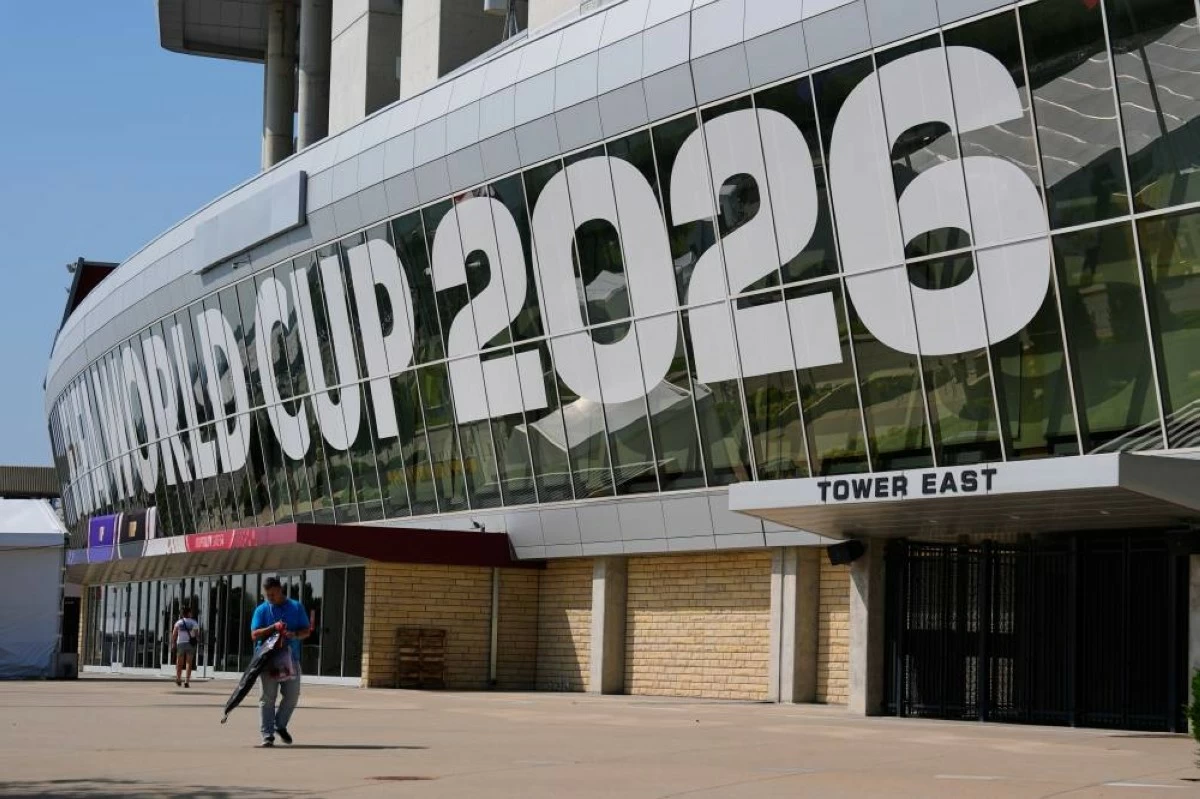
The 2026 FIFA World Cup will mark an unprecedented moment for the Arab world. For the first time since the tournament began in 1930, eight Arab nations will take their place on football’s biggest stage. It is a milestone that extends far beyond sport. It reflects a region whose confidence, investment, and ambition have reshaped its presence in global arenas. What was once symbolic participation has evolved into a collective statement of capability and aspiration.
For decades, Arab representation at the World Cup was limited — one or two teams every four years, often carrying the hopes of an entire region. In 2010 and 2014, only one Arab team qualified. In 2006 and 2002, there were two. Even the 2018 and 2022 editions, which featured four Arab teams each, now seem modest by comparison. The jump from four to eight is not merely numerical; it signals a structural transformation in Arab football. It reflects years of investment in youth development, professional leagues, and sports infrastructure — particularly in the Gulf, where football has become a strategic pillar of national development.
The expansion of the World Cup to 48 teams opened the door wider, but qualification remains earned, not gifted. The presence of Qatar, Saudi Arabia, Morocco, Tunisia, Algeria, Egypt, Iraq, and Jordan demonstrates that Arab football has reached a new level of maturity. Morocco’s historic semifinal run in 2022 proved that an Arab team can compete with the world’s elite. Saudi Arabia’s stunning victory over Argentina in the same tournament showed that Arab teams are no longer intimidated by football’s traditional powers. These moments have reshaped expectations across the region.
This time, Arab teams arrive not to participate, but to compete. Morocco seeks to build on its 2022 success. Algeria returns with renewed determination. Egypt aims for its first World Cup win after years of nearmisses. Jordan enters as a debutant with momentum and belief. Gulf teams — Saudi Arabia and Qatar — carry the weight of rising domestic leagues and significant investment in talent development. The narrative has shifted: ambition has replaced anxiety.
The broader implications are equally significant. Eight Arab teams mean unprecedented regional viewership and a shared sense of pride across a region often divided by politics but united by sport. It also means greater commercial influence. Global brands increasingly view the Arab world as a central market, and the World Cup amplifies that visibility. For Gulf states in particular, football is part of a wider strategy of soft power, economic diversification, and global engagement. The 2026 tournament will reinforce that trajectory.
Economically, the impact is substantial. A strong World Cup presence boosts player valuations, attracts foreign investment into domestic leagues, and accelerates the development of youth academies. The Gulf’s financial strength, North Africa’s deep talent pool, and the Levant’s rising football culture are converging into a single, interconnected ecosystem. This is not a temporary surge; it is the beginning of a longterm cycle that will shape the region’s sporting landscape for years to come.
Yet the most profound shift may be psychological. For generations, Arab fans watched the World Cup with divided loyalties — supporting a lone Arab representative while adopting a European or South American team as their secondary choice. In 2026, the region enters with a full delegation. Eight flags. Eight anthems. Eight opportunities to dream. The emotional weight of that moment will resonate from Rabat to Riyadh, from Cairo to Dubai.
The presence of eight Arab nations in the World Cup is more than a statistic. It is a declaration of arrival. It signals that Arab football has moved from the margins to the center of the global game. It affirms that the region is ready not only to participate, but to contend. And it underscores that the next chapter of world football will not be written without the Arab world playing a leading role.
(Abdul Hamid Ahmad is a UAE Writer and Columnist)