
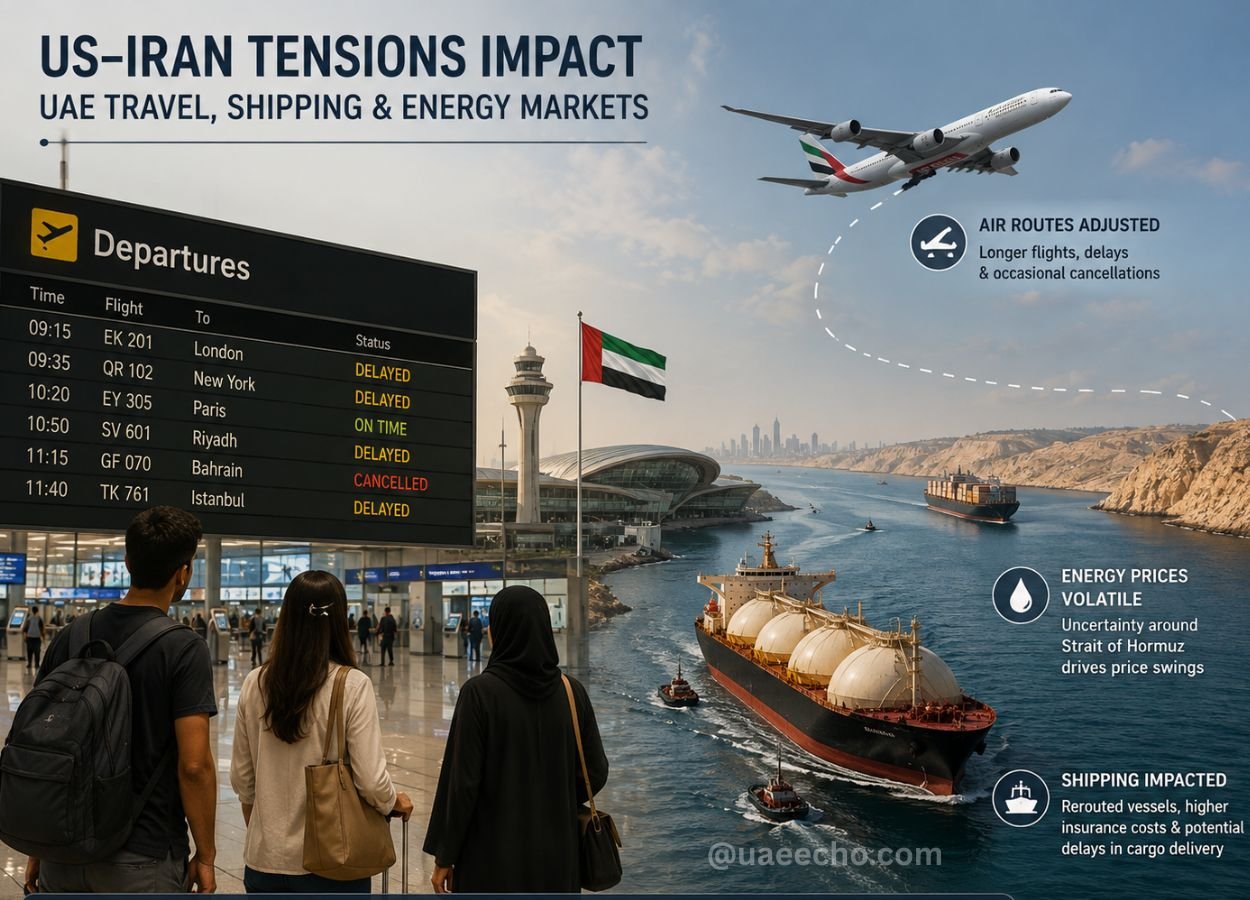

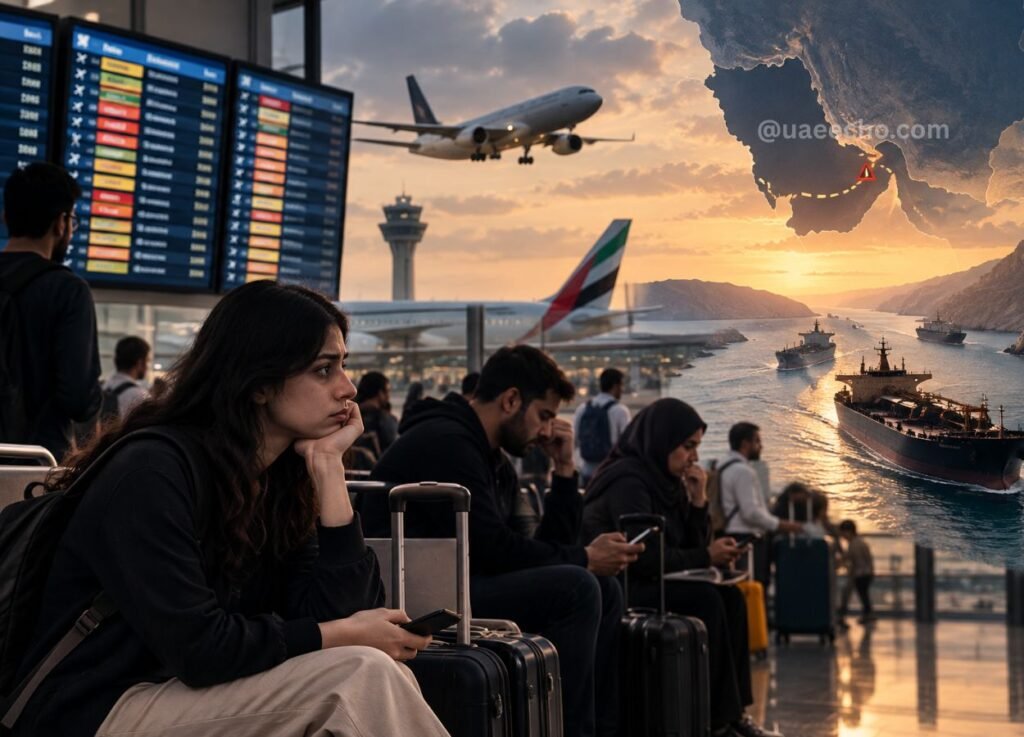
Ongoing geopolitical tensions between Washington and Tehran continue to generate secondary effects across the Arabian Gulf, leaving United Arab Emirates commuters, air travelers, and commercial operators navigating operational adjustments and localized market volatility. While essential civil infrastructure and domestic security within the country remain entirely stable, prolonged diplomatic friction centered on the strategic Strait of Hormuz continues to produce tangible impacts across regional transportation, maritime shipping, and energy sectors.
The most immediate friction point for UAE residents centers on ongoing adjustments to flight itineraries and maritime transport corridors.Commercial air carriers operating out of Gulf hubs are maintaining altered flight paths to avoid restricted airspace, resulting in periodic schedule modifications, extended travel times, and occasional cancellations on select international routes. At the same time, global energy benchmarks have experienced heightened price fluctuations driven by lingering access uncertainties surrounding the narrow Gulf waterway.
Federal transport authorities and major international aviation hubs urge passengers traveling through UAE airports to verify flight statuses directly with their respective airlines before heading to terminals. While domestic airport operations continue normally, international flight schedules remain subject to swift security evaluations. Major regional carriers have activated alternative routing protocols to mitigate passenger delays, though travelers are advised to allocate additional time for airport check-in and security processing.
Beyond aviation, regional supply chains and maritime logistics continue adjusting to stringent maritime safety protocols. Although diplomatic mediation efforts mediated by neighboring Gulf states aim to secure reliable passage agreements for commercial shipping, elevated marine insurance rates and precautionary vessel rerouting continue to affect cargo timelines. Economic analysts note that these transport recalibrations could influence freight expenditures for imported consumer goods in the short term.
Government agencies across the UAE emphasize that national territory and airspace remain completely secure. Officials advise residents to consult verified state announcements for accurate updates on travel advisories, commercial fuel adjustments, and regional transit developments, while avoiding the spread of unverified speculation online.