


Doctors say repetitive texting and scrolling can strain tendons and joints, but small changes in phone habits can help reduce discomfort
New York: If your thumbs, fingers or wrists ache after spending hours texting, scrolling or watching content on your phone, you may be experiencing what health experts commonly refer to as “texting thumb.”
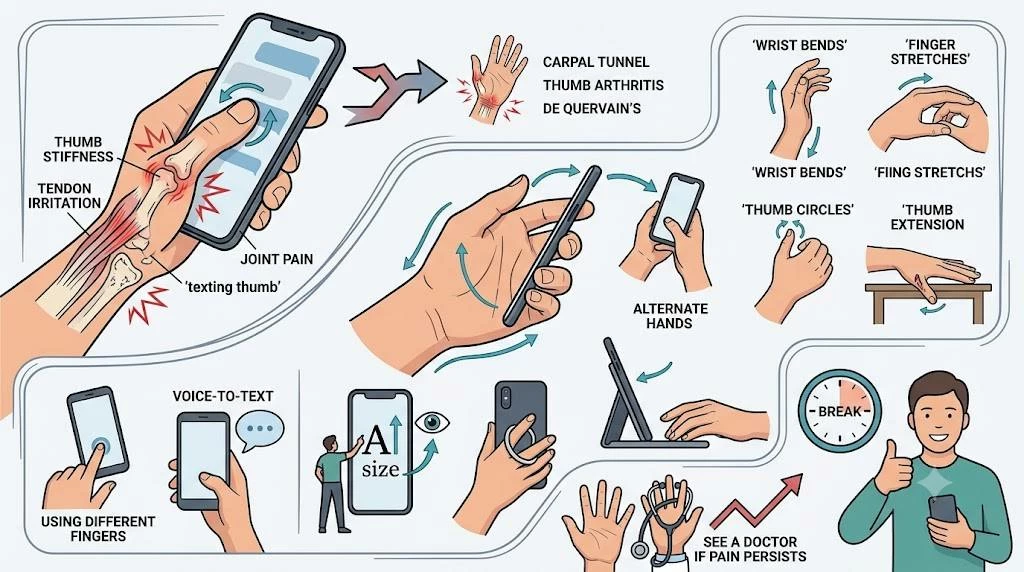
The term covers a range of phone-related conditions caused by repetitive movements and prolonged device use, including thumb stiffness, tendon irritation, joint pain, clicking sensations and discomfort at the base of the thumb.
Experts warn that untreated overuse can contribute to more serious conditions such as carpal tunnel syndrome, thumb arthritis and De Quervain’s tenosynovitis, a painful inflammation affecting tendons near the thumb and wrist.
Why phones are putting more strain on hands
Modern smartphones are larger and heavier than earlier devices, and people now use them for much more than calls and messages. Activities such as social media scrolling, online banking, shopping, video streaming and gaming can keep hands in fixed positions for extended periods.
According to hand specialists, maintaining the same wrist, elbow and thumb positions for long periods can place excessive strain on muscles, tendons and joints.
How to reduce phone-related hand pain
Health experts recommend several practical ways to minimise discomfort:
Take regular breaks from your phone.Alternate hands while texting or scrolling.Use different fingers rather than relying solely on your thumbs.Make use of voice-to-text features when possible.Increase font sizes to reduce the need to hold devices close to the face.Use phone grips or ring accessories to distribute weight more evenly across the hand.Prop the device on a stand when watching videos instead of holding it continuously.Simple stretches can help
Doctors also recommend daily hand and wrist stretching exercises, including:
Gently bending the wrist forward and backward.Stretching each finger individually.Rotating thumbs in small circles.Placing the hand flat on a surface and gently extending the thumb away from the fingers for about 30 seconds.These exercises can help relieve tension and improve flexibility.When to see a doctor
Experts advise seeking medical attention if symptoms persist despite reducing screen time and using basic remedies such as rest, ice or over-the-counter anti-inflammatory medication.
Persistent pain, numbness, tingling, swelling or loss of hand function could indicate a more serious condition requiring professional treatment.
As smartphone use continues to increase, specialists emphasise that prevention remains the best approach.
“Our hands were not designed to use phones all day long,” said Dr. Eugene Tsai of Cedars-Sinai Orthopaedics and Sports Medicine. “In order for us to use the phones, we have to be kind to our hands.”


