


New regulations boost sector growth, attract talent and strengthen content standards
Dubai: Mohammed Saeed Al Shehhi, Vice Chairman of the National Media Authority, revealed that the number of licensed content creators in the UAE has reached 15,000 from more than 90 nationalities since the launch of the ‘public’ permit. He stressed that the licence was not intended to impose restrictions on the content industry, but rather to regulate the sector, build an accurate database of content creators, and promote quality and professional responsibility.
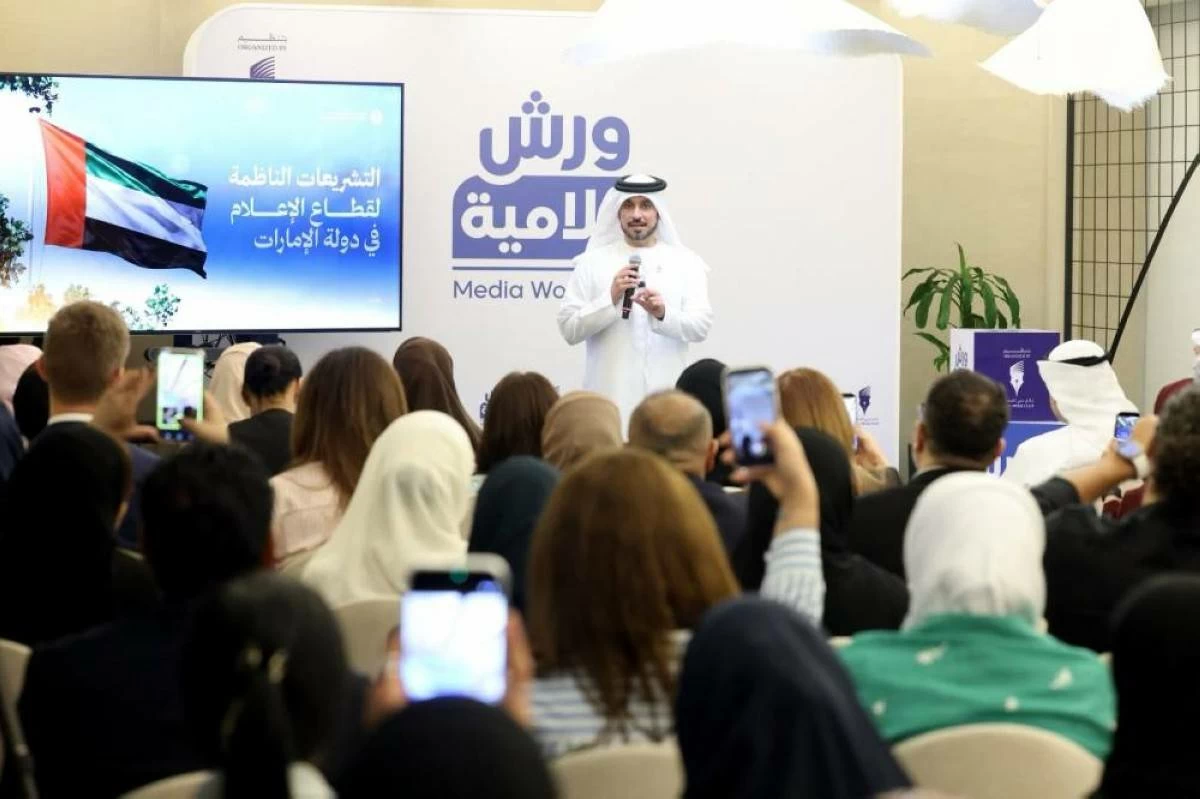
This came during the specialised media workshop, ‘Media Content Standards Adopted in the UAE’, organised by the Dubai Press Club in cooperation with the National Media Authority. Al Shehhi reviewed the most prominent transformations witnessed by the country’s media sector over the past three years, as well as new legislation that has enhanced competitiveness and attracted investments and talent.
Al Shehhi explained that, under the guidance of the UAE leadership, the Authority worked to develop the legislative system for media after the media regulation law had remained unchanged for more than 40 years. A new media law was issued in 2023 to keep pace with the rapid changes in the sector.
He pointed out that the new law introduced three main transformations: the cancellation of penalties previously included in the law and their replacement with administrative violations; allowing investors of different nationalities to own media institutions within the country; and transferring many regulatory powers to local media authorities across the emirates. These changes have contributed to increasing competitiveness, boosting growth rates, and attracting more media companies and projects.
Al Shehhi stressed that the Authority did not aim to over-regulate the sector but focused on providing a flexible legislative environment that supports media growth. He noted that the Media Regulation Law introduced 20 standards for media content, clarifying the professional frameworks that media professionals and content creators must follow to ensure procedural clarity and enhance content quality.
He added that the launch of the “public” permit marked a qualitative leap in regulating the content industry, explaining that the country previously lacked accurate data on the number of content creators and their areas of specialisation. Today, it is possible to identify and classify them based on the nature of their content.
Al Shehhi emphasised that all content produced or circulated within the UAE contributes to shaping the country’s image and reputation, making quality a shared responsibility between regulatory authorities, media professionals and content creators. He highlighted that the aim of media content standards is to ensure responsible, safe and high-quality content without compromising creativity or freedom of innovation.
He added that the National Media Authority views creativity as a key element of success in the media sector, and that its role is to regulate the media environment and provide frameworks that ensure professionalism while maintaining space for creativity and innovation, supporting the UAE’s position as a regional and global hub for media and content creation.


